
The Reserve Bank on Friday projected retail inflation to be in 5-5.2 per cent range during the first half of the next fiscal year, expecting further softening of vegetables prices in near term. Also, it has lowered the retail inflation forecast for the current January-March quarter of 2020-21 fiscal at 5.2 per cent. The Reserve Bank (RBI) has kept the key policy rate unchanged at 4 per cent, with an accommodative stance, so as to ensure that inflation remains well within the target, Governor Shaktikanta Das said while announcing the last monetary policy of 2020-21.

Amid the rhythmic chug of the train, a chorus of voices rises, each bearing its tale of hope and despair.

Less-than-expected rainfall and a poor spatial distribution, experts say, can rekindle fears of a rise in food and fuel inflation that can have an impact on the RBI's monetary policy. The fear of less than optimal rainfall due to El Nino this year, analysts believe, is the biggest short-term risk for the markets, which they said has not been fully priced in yet by them. Monsoon set over Kerala on June 08, a week later than its scheduled date.

Inflation data, both at domestic and global level, interest rate scenario in the US, geopolitical situation and general elections in 2024 are some of the major factors that would influence trading in the equity market this financial year, analysts said. Besides, foreign fund trading activity and global trends will also dictate terms in the equity market going ahead. Equity markets across the globe faced major challenges in FY23 due to concerns over high inflation, which resulted in increase in interest rates around the world, lowering investor sentiment, experts added.
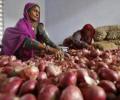
In case of onions, inflation skyrocketed to 127.04 per cent, while for the eggs, meat and fish segment the rate of price rise was 5.76 per cent.

'The main worry is lots of new investors coming into the markets in order to make a quick buck/easy money.' 'Those things are happening again and have happened in the past as well.' 'All that has led to problems.' 'We are not there yet, but will get there eventually.'

The Congress on Friday claimed that a 'silent undercurrent' is brewing across western Uttar Pradesh against the 'failures' of the Modi government, as it flagged issues such as 'neglect' of sugarcane farmers and examination paper leaks.

Equities went into a tailspin on Wednesday after the Reserve Bank surprised the market with a mid-cycle rate hike in a bid to tame soaring inflation.

RBI watchers are going to be on tenterhooks for the next 3 weeks.

The Planning Commission on Friday said that high inflation, primarily driven by rising food prices, is likely to ease in the next few months on the back of an expected good rabi crop.

With the first quarter earnings season coming to an end, the domestic equity markets would be driven by global trends and trading activity of foreign investors this week, analysts said. The movement of global oil benchmark Brent crude and the rupee against the dollar would also drive trends in the market. "Macroeconomic indicators, trends in global stock markets and FII activities will be pivotal in shaping market trends in the coming days," Pravesh Gour, senior technical analyst at Swastika Investmart Ltd, said.

FM Chidambaram has announced that keeping the inflation rate low was top priority for him.

'We expect the bull-market phase to still persist, but now led by large-caps which offer better valuation and benefit from FII inflows.'
'We expect continued pressure on midcaps, but any sharp correction looks unlikely from here on.'
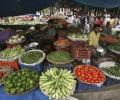
'Both IIP and CPI inflation numbers are showing a huge disconnect from the leading indicators.'

With prices of essential items rising and fears of food inflation spreading to manufactured goods, the overall inflation for March, data for which is expected next week, is likely to cross the double digit mark.

'The BJP is using administrative machinery to fight elections'
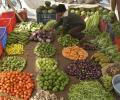
Onion prices, however, continued to rule high with 79.78 per cent increase in September.
The fear that the recent rise in the inflation rate will scupper their chances of re-election has led the United Progressive Alliance government to blame the usual suspects: hoarders, monopolists, and of course, foreigners. So bring back discredited policies: raid hoarders, torment speculators and ban export of agricultural products.

Among the Sensex firms, HDFC Bank emerged as the biggest loser, falling 4 per cent. JSW Steel, Reliance Industries, UltraTech Cement, Maruti, Tata Steel, Wipro, Tech Mahindra, Bharti Airtel and Larsen & Toubro were the other major laggards. Power Grid, Asian Paints, Sun Pharma, Axis Bank, NTPC, ITC and Infosys were among the gainers.

It pointed out that farm loan waivers, combined with a potential stimulus which the government is mulling now, can result in a 1 percentage point slippage in fiscal deficit

Apart from the human body, human food will bear direct repercussions. From staples such as wheat, to coffee, dairy, and even the great Hilsa face the threat of reduced supply due to the extreme heat.
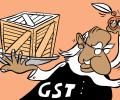
Taiwan in 1951 came up with an ingenious plan to improve tax compliance: citizens taking receipts for purchases could use them as lottery tickets. Customers were incentivized, and businesses found it hard to evade taxes. The plan's success prompted other countries, Slovakia and Greece among them, to launch similar initiatives. India doesn't seem to find the need yet for such schemes amid surging goods and services tax (GST) collections.
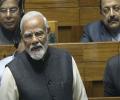
Prime Minister Narendra Modi on Monday expressed confidence that the NDA will get more than 400 seats and the BJP will win at least 370 seats in the Lok Sabha elections.
The current fiscal began with inflation rising to 5.26 per cent during the week due to costlier food, fuel and manufactured products.

This election will be remembered for being the first election where the Election Commission failed to take action on gross violations involving the ruling party that repeatedly used religion, communal slurs, lies and undocumented allegations, observes Ramesh Menon.

The T20 World Cup 2024 promises to be a tournament dominated by bowlers, particularly spinners.
Maruti Suzuki and other Indian companies are bracing themselves for a slump in demand after a 13-year high inflation triggered fears of curbs on consumer spending and the central bank raising interest rates, thereby hurting India Inc's expansion plans. The annual wholesale price index -- the most watched index in the country to gauge rising prices -- rose to 11.05 per cent in the last 12 months ending June 7.

Indices across Indian equity markets have edged towards new record highs before undergoing a small correction in the past few sessions. The National Stock Exchange Nifty has gained 20 per cent in the past year; mid-caps (up 33 per cent), small-caps (up 31 per cent), and micro-caps (up 44 per cent) have done better. Several factors have precipitated this rally.

India's economic growth is now 'extremely fragile' and needs all the support that it can get, as private consumption and capital investment are yet to pick up, RBI Monetary Policy Committee (MPC) member Jayanth R Varma said on Friday. Varma further said out of the four engines of growth for the economy, exports and government spending supported the Indian economy through the pandemic, but other engines need to pick up the baton now. " I like to think in terms of the four engines of growth for the economy: exports, government spending, capital investment and private consumption. "...while exports cannot be the main driver of growth because of the global slowdown, government spending is necessarily limited by fiscal constraints," he told PTI.

The Indian PC market grew by 17.8 per cent in shipment to 3.7 million units in the April-June 2022 quarter, International Data Corporation (IDC) said in a report on Thursday. The PC market includes desktops, notebooks and workstations.The notebook category continued to be the volume driver, with the shipment of 2.6 million units in the June 2022 quarter. However, its growth rate reduced to 7.3 per cent compared to over 30 per cent on average for the last three quarters.

From the Sensex pack, Bharti Airtel, HDFC Bank, Titan, UltraTech Cement, ITC, Sun Pharma, Bajaj Finserv, Bajaj Finance, Hindustan Unilever and Kotak Mahindra Bank were among the major gainers. Tata Steel, Axis Bank, NTPC, ICICI Bank and IndusInd Bank were the major laggards.

It would also be the last policy of Rajan
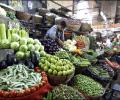
Retail inflation has eased from double digits in 2013.

The weekly inflation had surged over 18%, as per the recently announced data. The Central Bank is scheduled for a policy review on January 25.

India on Tuesday set a minimum export price for onions of $300 per tonne to discourage overseas shipments amid an inflation scare that threatens to stoke public anger over rising prices at local food markets.
Bankers were optimistic about the Reserve Bank's annual credit policy, which left all key rates unchanged, but feared that there could be tightening measures in the near future if it had to contain inflation around five per cent.

Investors' wealth eroded by Rs 7.59 lakh crore on Monday as the equity market took a heavy drubbing amid escalating tensions in the Middle East. The 30-share BSE Sensex plunged 825.74 points or 1.26 per cent to settle at 64,571.88 points. During the day, the index plummeted 894.94 points or 1.36 per cent to 64,502.68 points.

'As the Indian economy continues to expand over the next three years, mid- and small-caps should do well as they have higher exposure to the domestic economy than large-caps.'
The Bombay Stock Exchange's benchmark 30-stocks index -- the Sensex -- tumbled by over 500 points on Friday on fears that the Reserve Bank of India will increase interest rates to curb surging inflation.

Of the 40 CEOs polled from across the country, 60 per cent identified a fractured electoral mandate as a bigger risk than trade wars, volatile oil prices, and inflation.
 © 2026 Rediff.com - Advertise with us - Disclaimer - Privacy Policy - Sitemap - Feedback - About us - Terms of use - Grievances